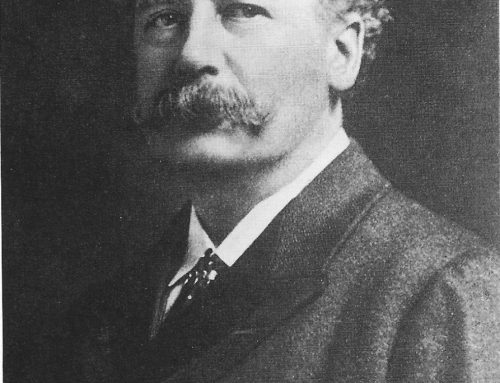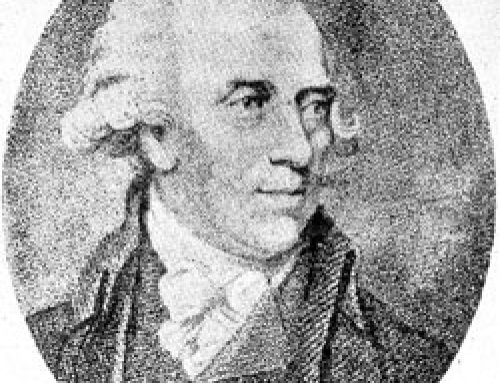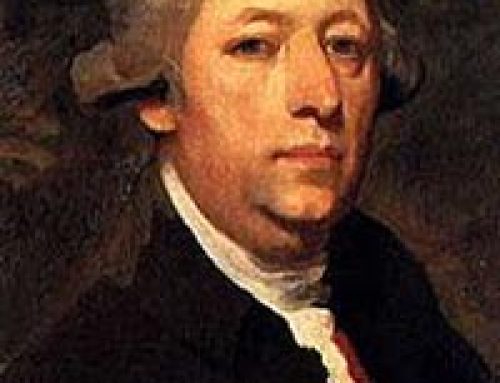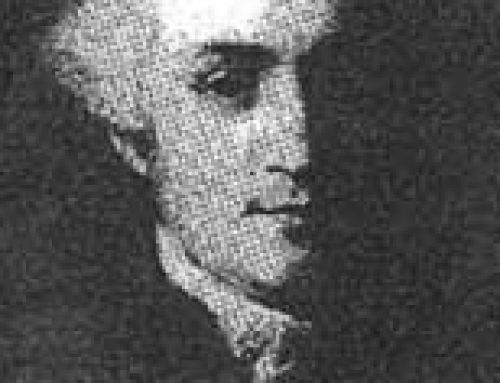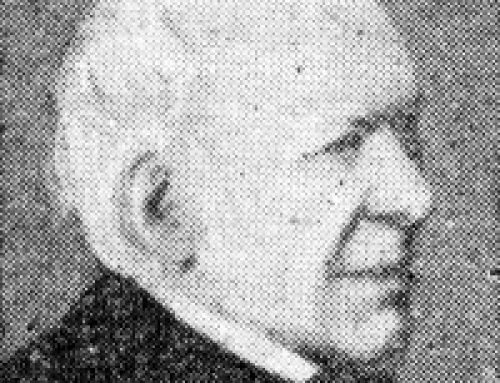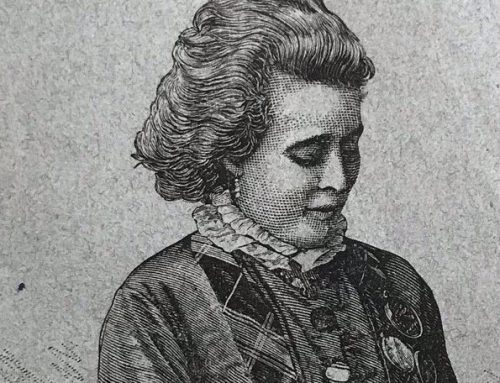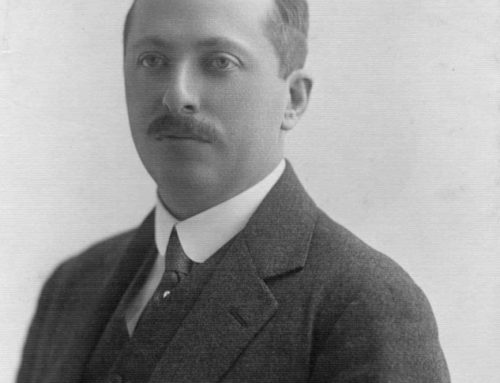
William Dickson
William Dickson
William Dickson
Inventor
Inventor
1860-1935
1860-1935
"The man who effectively invented motion picture films"
 William Kennedy Laurie Dickson died at 27 Montpelier Row, Twickenham, on 28 September 1935 and was buried in Twickenham Cemetery having earned his place in motion picture history having made around 600 of the earliest motion pictures. He was also the inventor of The Mutoscope, an early device that provided viewing to only one person at a time. Similar to an animated flip book, about 850 individually photographed cards were attached to a hand-cranked circular core, giving about a minute’s viewing time. These ‘peep shows’ were a popular feature of UK arcades and pleasure pier amusement until the 1970s, usually presenting a mixture of risqué titles, the most common being ‘What the Butler Saw,’ implying more than the reel actually delivered.
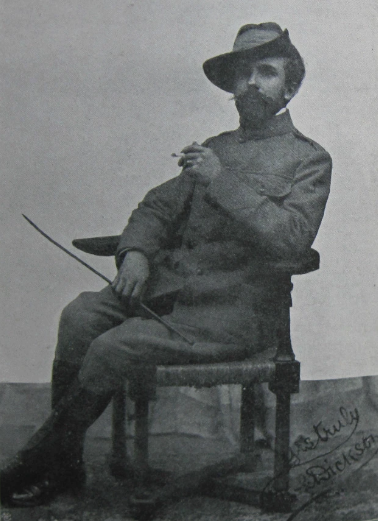
Dickson was born in Brittany on 3 August 1860 to James Dickson, a distinguished English painter and lithographer and Elizabeth Kennedy-Laurie, a gifted scholar and musician. As a youngster, William harboured an interest in electrical experimentation with Thomas Edison his hero. Raised in Cheshire, he went to America in 1879 and found work with Edison as his assistant in charge of the production of the Kinetoscope and Kinetograph, the first commercially successful moving image machines.
In 1891–1892, Dickson established what we know today as the 35mm film format. He also designed the Black Maria film studio and facilities to develop and print film. He supervised production of more than 100 films for Edison before leaving to become a founding member of the rival American Mutoscope Company. In 1897, he returned to England to set up the British Mutoscope and Biograph Company where he served as chief camera operator filming news and travel. Most notably was the Anglo-Boer War, the first conflict to be recorded by film cameras. He wrote a diary, originally for serialisation in Pearson’s Illustrated War News, which was published as a book illustrated with many images of the battles of Colenso and Spion Kop.

Dickson’s Mutograph camera at Chieveley filming a naval gun battery. Note the bicycle wheel which drove a suction pump that flattened the unperforated film against the aperture plate.
Dickson sailed from Southampton on 14 October 1899, accompanied by two assistants equipped with the unwieldly Mutograph camera and equipment, which he describes in his book:
Getting back to a safer position, we watched the valiant attack of our men as they gradually pushed on. Had we a light camera these movements could have been secured, and many others of a valuable nature, but the enormous bulk of our apparatus which had to be dragged about in a Cape cart with two horses, prevented our getting to the spot. The difficulties were aggravated by the absence of roads, while the huge gullies we had to cross and the enormous boulders we had to get over made the enterprise almost impractical.
His films documented the everyday, as well as the progress of the British army from optimism to disaster in its quest to relieve the besieged town of Ladysmith. Believing the war to be over, Dickson left Cape Town for Southampton on 18 July 1900. His films had been a regular feature at the Palace Theatre in London and theatres around the world equipped for Biograph films.
Little is known of his life until 1911 when he was living on the Brompton Road in Kensington, West London, with his wife Lucie who was born in Petersburg, USA. He was twice married and had one (adopted) son. His active involvement with the British Mutoscope and Biograph Company had come to an end. Edison wanted nothing more to do with him, regarding him as disloyal. Inevitably, he became a victim of the famous inventor’s ruthlessness with his contributions to the film industry inevitably suppressed.
Sources
The Biograph in Battle https://thebioscope.net/2009/05/23/the-biograph-in-battle
The Man Who Made Movies: W.K.L. Dickson by Paul Spehr. John Libbey Publishing. 2008