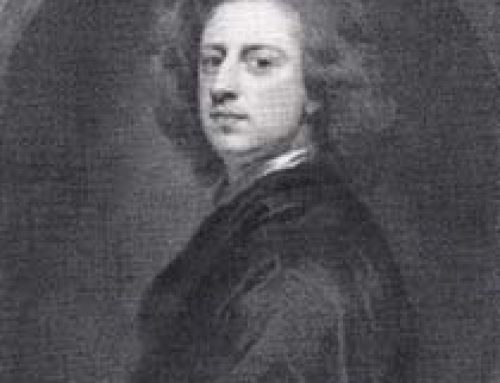
William Marlow
People: Artists
William Marlow
William Marlow
Landscape and View Painter
Landscape and View Painter
1740/1 – 1813
1740/1 – 1813
"He was listed among the six most eminent landscape painters of our country"
Training and Early Career
William Marlow was born in London, possibly Southwark, and was apprenticed to the marine painter Samuel Scott at his studio in Covent Garden, from 1754 to 1759. He learned to paint London scenes in oils and watercolours which, like Scott’s, show the influence of Canaletto on English topographical painting. Marlow probably also studied at the St Martin’s Lane Academy. He exhibited regularly at the Society of Artists from 1762 showing scenes of London, including Twickenham, east Wales, Worcester and York. Scott lived at the Manor House in Church Street, Twickenham for several years from c1758, where Marlow would later live, so he may have known Twickenham from this time. In 1763 his watercolours illustrating William Chambers’ designs for buildings and improvements at Kew Gardens were engraved.
Continental Travels
Early in his career Marlow was employed by the Duke of Northumberland who was also a patron of Canaletto and Scott. In 1765, at the suggestion of the Duchess of Northumberland, Marlow visited France and Italy. Eight Italian views at Alnwick Castle suggest that the Duchess was a sponsor of the trip. On his return to London in 1766 he specialized in watercolour and oil paintings of continental subjects. He exhibited a total of 152 paintings – 125 at the Society of Artists, two at the Free Society of Artists and 25 at the Royal Academy, the majority of which were French and Italian subjects. He was elected to the Society of Artists in 1765 and became a director in 1768. His success led to patronage by the Dukes of Devonshire, Grafton and Rutland, the Earl of Carlisle , Lord Palmerston and Horace Walpole.
Settles in Twickenham

Orleans House, Twickenham
Marlow’s success as an artist continued into the 1780s and earned him enough money to enable him to move from his studio premises in Leicester Fields in central London to the Manor House at Twickenham. According to the Rate Books Marlow lived at the Manor house and paid rates from 1775 to 1810. By the late 1780s his popularity had faded and a venture into publishing etchings and prints was not a success. He ceased exhibiting in 1792 except for two pictures in 1807 at the Royal Academy one of which was ‘Twickenham Ferry by Moonlight’.
John Curtis and his wife lodged with Marlow at the Manor House. Curtis became a landscape painter under Marlow’s tutelage and exhibited
Little is known of Marlow’s personal life but in 1808 Joseph Farington, landscape painter and diarist, recorded: ‘Marlow resides at Twickenham with a man whose name is Curtis. He was a butcher when Marlow first became acquainted with his wife who he met at Vauxhall. He has lived more than 20 years with them and there are now 6 or 7 children, some of them very like Marlow… He still applies to painting but with very little of his former power.’
Marlow died in Twickenham on 14 January 1813. Farington recorded that he ‘… died possessed of property which brought him in £100 per annum’ and that ‘He was charitable so as to expend the whole of his income. He had long given up painting for an amusement more agreeable to him, the making of telescopes and other articles.’
Further Reading
Dictionary of National Biography
Wikipedia
‘The Manor House Twickenham’ Borough of Twickenham Local History Society publication no. 60 by A C B Urwin.