William Hickey
People: Writers, Poets and Historians
William Hickey
William Hickey
Memoirist and Lawyer
Memoirist and Lawyer
1749 - 1827
1749 - 1827
"a life of idleness and dissipation"
William Hickey , lawyer in India and memoirist in England, was born in St Alban’s Street, Pall Mall, Westminster, on 30 June 1749. The seventh child of Joseph Hickey (1712–1794), an Irishman, a successful London attorney, and his wife, Sarah Boulton (1720–1768), whose family were landed property owners in Yorkshire.
He began his education at Westminster School, but was removed “in high disgrace” in December 1763 after neglecting his studies, frequenting public houses and leading, in his own words, a life of “idleness and dissipation”. Instead he was sent to a private school at Streatham where he was able to study Arithmetic, Writing, French, Drawing and Dancing in addition to the Classical Studies which had failed to engage him at Westminster.
Naughty Neighbour
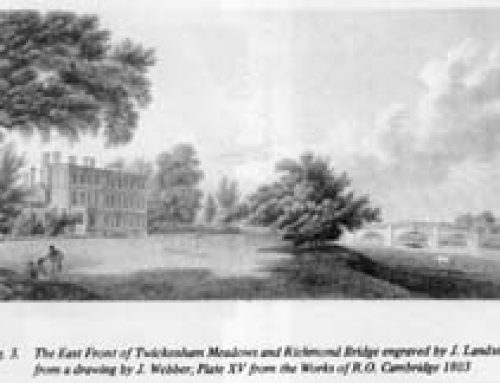
The Hickey family had moved to Twickenham in 1755, moving to a new house on the site of the old Tanyard in 1757 where they were near neighbours of the artist Thomas Hudson. Hudson, therefore must have seen a good deal of young William, despite his time away at Westminster School. In 1761 during the Whitsun holidays, young William was back in Twickenham. In his Memoirs, William Hickey leaves the following description of Thomas Hudson then aged 60:
His figure was rather grotesque, being uncommonly low in stature, with a prodigious belly, and constantly wearing a large white bushy periwig. He was remarkably good tempered, and one of my first- rate favorites, notwithstanding that he often told me I should certainly be hanged.
William frequently played tricks on the old gentleman, on one occasion kicking the stick away from under him as leaned on it whilst talking to Joseph Hickey. Down came poor Mr Hudson upon his fat paunch. William took to his heels, and only escaped severe punishment from his father because Hudson in a fury flung a heavy stick at William’s head, missing it narrowly. William then apologised and he claimed that he was readily and kindly forgiven. Perhaps.
Other near neighbours suffered from young William’s pranks, including Sir William Stanhope in Pope’s Villa and Mr Hindley, who had inherited Radnor House in 1757. One of these involved a simulated drowning from Mr Hindley’s canoe, which caused temporary consternation. Acquiring a small wherry of his own he became accustomed to row himself up to London from time to time and on one occasion he was given a tow home by the Fishmongers, out for a celebration in their barge. They entertained him with far more food and drink than he could accommodate and he spent the night, insensible, at Richmond.
In January 1766, he left school and began his legal training at his father’s law firm, but he continued to lead an extremely debauched existence, visiting the prostitutes of Covent Garden and drinking heavily. On more than one occasion, he was caught embezzling funds from the firm; finally, his father decided to send his son to India to see if he could make good. Accordingly, Hickey embarked on the ship Plassey, a fast East Indiaman at Dungeness on 4 January 1769.
Hickey practised as an attorney at the supreme court established in 1774 in the capital of the new British empire in India to administer English law to the inhabitants of Calcutta and to British subjects in Bengal generally.

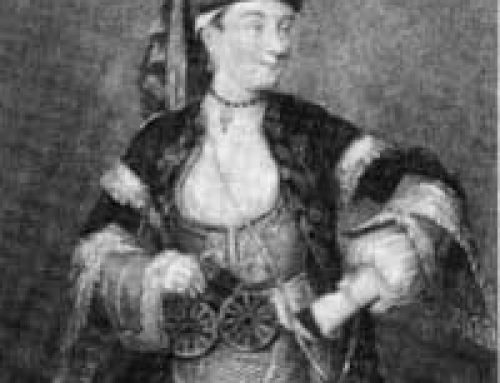
William Hickey and his Indian Servant Mannu
by William Thomas 1819
In addition Hickey served for some years as deputy to the sheriff of Calcutta and became clerk to Sir Henry Russell, ultimately chief justice of the supreme court. Although in his style of living he remained for many years something of a rake, his career in Calcutta appears to have been a success. He built up a large practice, relying especially on ‘native’ clients, and earned enough money to enable him to live in a very opulent way, even if he did not save any considerable fortune.
Fearing for his health, he reluctantly left India in 1808.
He is best known for his vast Memoirs, composed in 1808–10 and published between 1913 and 1925, which in their manuscript form cover 750 closely-written folio pages. Described by Peter Quennell as “One of the most remarkable books of its kind ever published in the English Language”, Hickey’s Memoirs give an extraordinarily vivid picture of life in late London, India, and Jamaica which stands comparison with the best of his near-contemporary James Boswell.
The actual date of William’s death is unknown, but his burial was recorded on 10 February 1827 at St John the Evangelist, Smith Square, Westminster. Prior to his death he had been living nearby in Holywell Street.
Further reading
Anthony Beckles Willson, Mr Pope and Others at Cross Deep, Twickenham, 1996
Dictionary of National Biography
Memoirs of William Hickey, edited by P.Quennell, 1960
William Hickey, Memoirs 1749-1775, ed. Alfred Spencer, Alfred A Knopf, 1921
The Streatham Society
Wikipedia